
INNOVATIVE APPROACHES IN MODERN PEDAGOGY: ENHANCING STUDENT ENGAGEMENT AND LEARNING OUTCOMES
DOI:
https://doi.org/10.55640/Keywords:
pedagogy, innovative teaching, student engagement, active learning, higher education.Abstract
x
Downloads
References
1.Brookfield, S. (2017). Becoming a Critically Reflective Teacher. John Wiley & Sons.
2.Schunk, D. H. (2020). Learning Theories: An Educational Perspective. Pearson.
3.Chen, F., Lui, A. M., & Martinelli, S. M. (2019). A systematic review of the effectiveness of flipped classrooms in medical education. Medical Education, 51(6), 585–597.
4.Siemens, G. (2015). Connectivism: A Learning Theory for the Digital Age. International Journal of Instructional Technology.
5.Freeman, S., et al. (2014). Active learning increases student performance in science, engineering, and mathematics. PNAS, 111(23), 8410–8415.
6.Hmelo-Silver, C. E. (2004). Problem-based learning: What and how do students learn? Educational Psychology Review, 16(3), 235–266.
7.Zawacki-Richter, O., et al. (2019). Systematic review of research on artificial intelligence in higher education. International Journal of Educational Technology in Higher Education, 16(1), 39.
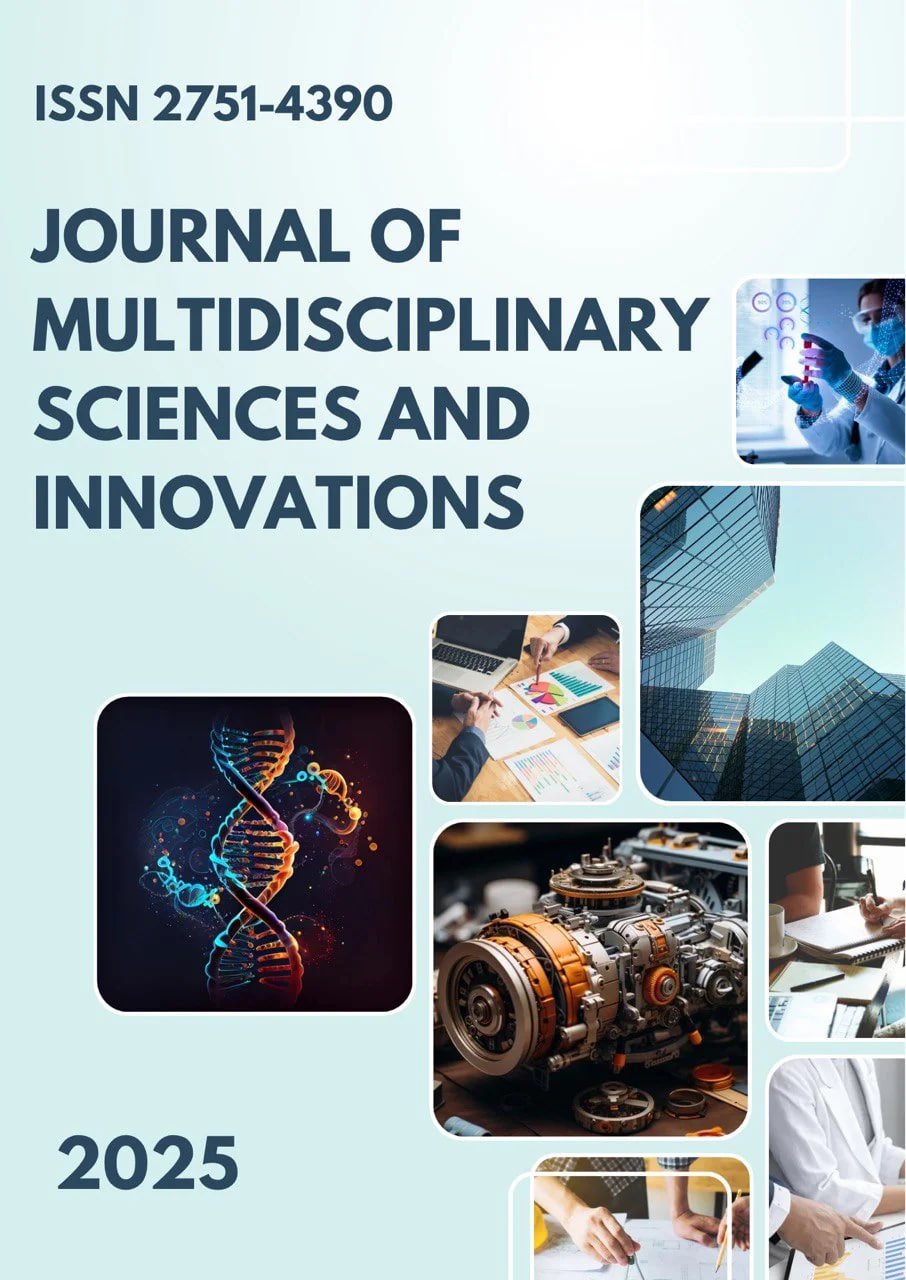
Downloads
Published
Issue
Section
License

This work is licensed under a Creative Commons Attribution 4.0 International License.
Authors retain the copyright of their manuscripts, and all Open Access articles are disseminated under the terms of the Creative Commons Attribution License 4.0 (CC-BY), which licenses unrestricted use, distribution, and reproduction in any medium, provided that the original work is appropriately cited. The use of general descriptive names, trade names, trademarks, and so forth in this publication, even if not specifically identified, does not imply that these names are not protected by the relevant laws and regulations.


 Germany
 United States of America
 Italy
 United Kingdom
 France
 Canada
 Uzbekistan
 Japan
 Republic of Korea
 Australia
 Spain
 Switzerland
 Sweden
 Netherlands
 China
 India